The 1931 Chess Club Call That Led to Murder — Julia Wallace
On a January evening in 1931, a stranger telephoned a Liverpool chess club and asked a man to visit an address that did not exist. The next night, that man's wife was dead — and the argument over who killed her has never really ended.
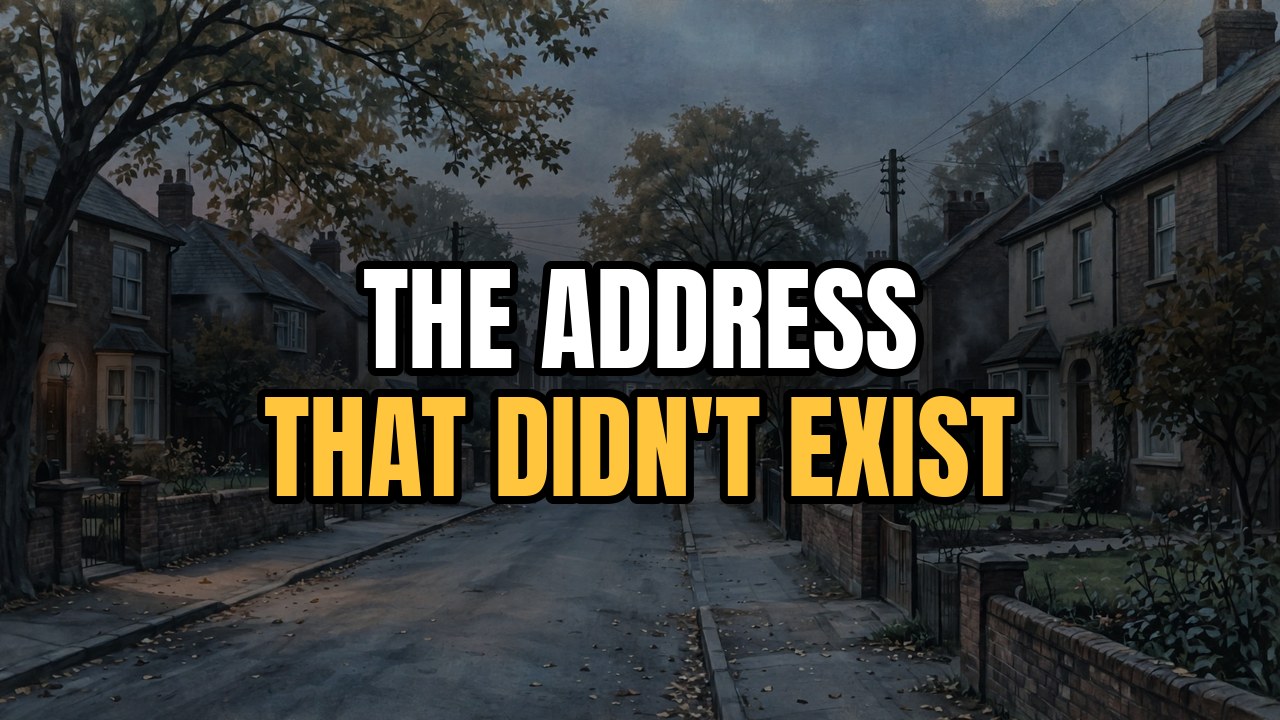
The message
On the evening of Monday, 19 January 1931, the Liverpool Central Chess Club was meeting at a city-centre café when the telephone rang. The caller asked for William Herbert Wallace, a 52-year-old Prudential insurance agent. Wallace had not yet arrived, so the club captain, Samuel Beattie, took the message.
The caller gave his name as R. M. Qualtrough. He wanted Wallace to call at 25 Menlove Gardens East at 7:30 the following evening, to discuss an insurance policy. Beattie wrote it down and passed it to Wallace when he arrived. Nothing seemed strange — Menlove was a real Liverpool district, and Wallace collected premiums there. It sounded like ordinary business.
It was not. Almost every part of that message was a fabrication — and by the time anyone understood that, Julia Wallace was dead.
The address that did not exist
On the evening of Tuesday, 20 January, Wallace left the couple's home at 29 Wolverton Street, Anfield, at about a quarter to seven, and travelled by tram across the city. He began asking for directions. He found Menlove Gardens North. He found Menlove Gardens South. He found Menlove Gardens West. But street by street, the evening turned stranger: there was no Menlove Gardens East — not that night, not ever. It simply did not exist.
Wallace asked residents, a policeman and tram staff — nobody could help, because there was nothing to find: the appointment, the client and the address were all invented. He gave up and turned for home. What he found there became one of the most famous unsolved cases in British criminal history.
The return home
Wallace reached Wolverton Street at about a quarter to nine. The house was dark; he later said both doors resisted him. Alarmed, he fetched his neighbours, the Johnstons, and together they got inside — and in the front parlour, they found Julia Wallace, dead. She had been attacked and killed while her husband was out searching for an address that never existed.
The neighbours raised the alarm. From that first night, the case split Liverpool in two — because the question was never only who killed Julia Wallace? It was also this: had her husband ever really left the house at all?
The impossible timeline
Detectives traced the Qualtrough call to a public telephone box only about 400 yards from the Wallace home, made at roughly a quarter past seven on the Monday evening — when Wallace himself was on his way to the chess club. So he could hardly have made it himself, unless someone made it for him, or the timings were wrong.
Then there was the milk boy, who said he had spoken with Julia at her door at about half past six on the night of the murder. If he was right, the window for everything police later accused Wallace of shrank to minutes. Detectives ran tram tests again and again, timing every step, trying to prove the impossible timeline possible. Thirteen days after the murder, Wallace was arrested and charged with killing his wife.
Arrest, trial — and a death sentence
The prosecution's case was built entirely on circumstance: Wallace, they argued, had invented Qualtrough, the appointment and the whole evening out as an alibi — killing Julia before he left, then riding trams and asking strangers for directions to an address he knew did not exist, manufacturing witnesses along the way.
The defence answered that the timeline did not fit, that no motive had been shown, and that suspicion is not the same thing as evidence. In April 1931, at the Liverpool Assizes, the jury took just one hour to decide: guilty. Wallace was sentenced to death.
The appeal that made legal history
But the story did not end there. Wallace appealed, and in May 1931 the Court of Criminal Appeal in London — led by the Lord Chief Justice, Lord Hewart — did something no English appeal court had ever done in a murder case: it ruled the jury's verdict could not be supported by the evidence. The conviction was quashed, and Wallace walked free.
He was never retried, and no one else was ever charged. The ruling changed English law: for the first time, a murder conviction had been overturned purely because the evidence was not enough. But it answered a legal question, not the human one. If Wallace did not kill his wife — who did?
Who was Qualtrough?
This is where the case leaves the record and enters theory — and every theory below is unproven.
The colleague theory. One theory points to Richard Gordon Parry, a young Prudential colleague. Supporters say Parry knew the chess club's schedule and Wallace's movements, and held a grudge after Wallace reported him for taking clients' money. He was never charged, and the evidence was never tested in court.
The Wallace theory. The prosecution's view: Wallace made the call himself, or arranged for someone to make it. This was argued at trial — and the appeal court found the overall evidence insufficient to sustain the conviction.
The unknown intruder theory. A third possibility is that someone else entirely used the fake appointment to draw Wallace out of the house. No intruder has ever been identified.
The caller who named himself Qualtrough has never been identified — not in ninety-five years.
The question that remains
William Herbert Wallace died in 1933, just two years after walking free, and was buried beside Julia. What the case leaves behind is a phone call from a man who may never have existed, an address that never existed, a husband freed because suspicion is not proof, and a woman whose killer was never found.
Sources: Liverpool City Police, "Julia Wallace Murder"; Wikipedia, "R v Wallace" and "William Herbert Wallace"; Skeptical Inquirer, "The 'Impossible' Murder of Julia Wallace". Visuals on the video are artistic reconstructions created for the retelling.
Watch the video
She was asleep on the balcony at 5:30. By 6:00, she was gone.
Next story: The Disappearance of Amy Bradley →